SCI 2026
Faculty of Science
Keynote & Invited Speakers
المتحدثون الرئيسيون والمدعوون
Distinguished experts sharing their insights and research
Keynote Speakers
المتحدثون الرئيسيون
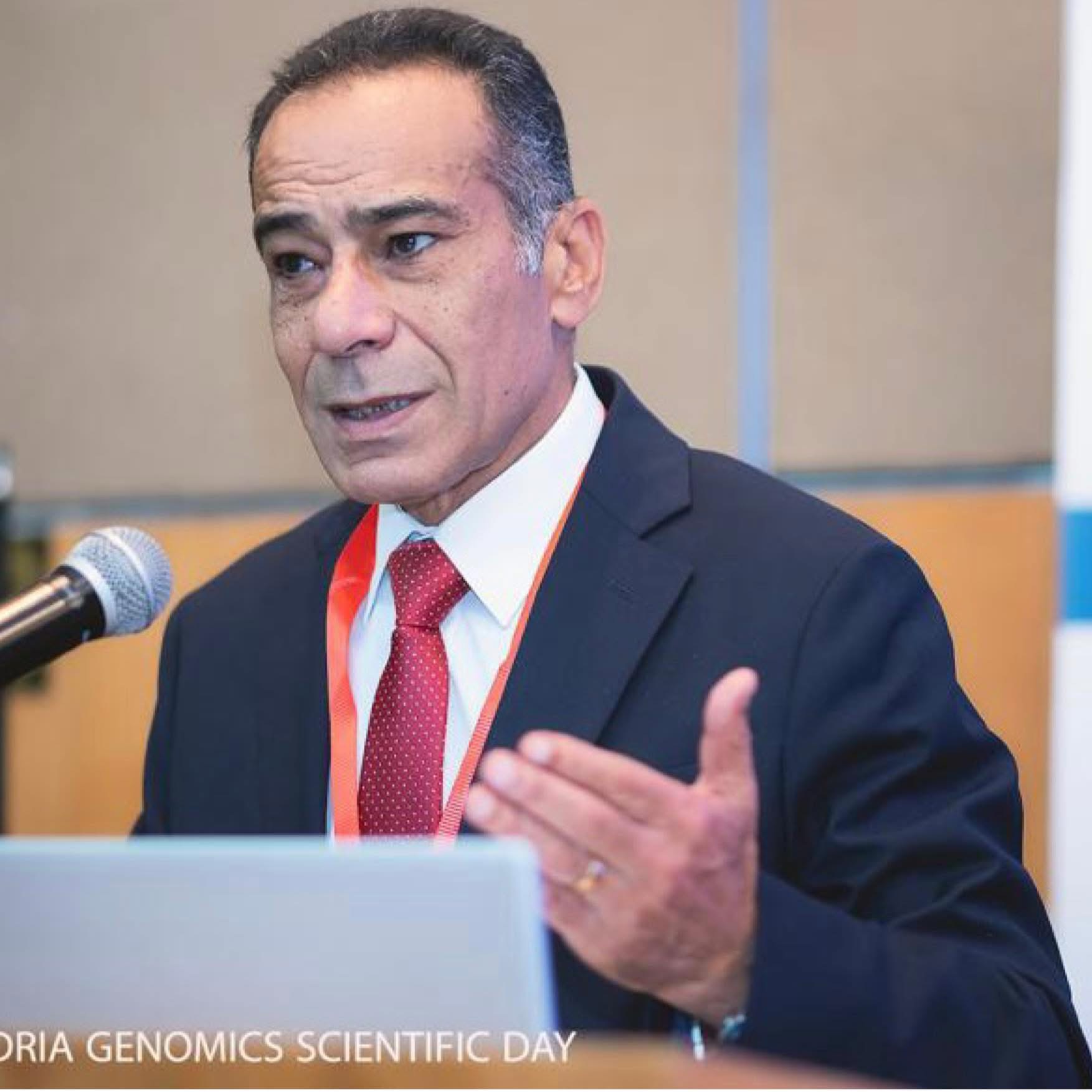
Principal Investigator of Human Genome project, Egypt Centre for Research and Regenerative Medicine (ECRRM)
Presentation Title
Egypt Genome; From Dream to Reality
Biography
Prof. Khaled Amer is a Professor of Hepatobiliary Surgery, Liver Transplantation, and General Surgery, and a leading authority in medical education, clinical practice, and biomedical research in Egypt. He is the founding Dean of the Armed Forces College of Medicine, where he led the establishment of the institution and the development of its medical curricula in alignment with international standards. In 2018, Prof. Amer was commissioned to establish the Center of Excellence for Research in Regenerative Medicine, which houses the National Reference Genome Laboratory, and he currently serves as the Principal Investigator of the Egyptian Genome Project—one of the country’s flagship initiatives in precision and genomic medicine. With decades of experience in advanced liver and transplant surgery, Prof. Amer maintains a strong academic profile, with regular publications in high-impact, peer-reviewed international journals. He serves on several national scientific and transplant committees and boards, and his contributions to medicine, research, and higher education have been recognized through multiple national honors and awards.

Deputy Director of the Biochemistry & Molecular Biology and Medicinal Chemistry Division and head of Center of Excellence in Recombinant Biopharmaceutical Proteins (CERBioP), Theodor Bilharz Research Institute, Egypt
Presentation Title
Center of Excellence in Recombinant Biopharmaceutical Proteins (CERBioP) in TBRI; From Scientific Innovation to The Egyptian Biopharmaceutical Industry
Abstract
Concerning the recombinant biopharmaceutical drugs industry, Egypt is the most promising large market in Africa and Middle East. Egypt has strong rising biopharmaceutical industry with massive needs to world class R&D centers in this advanced field. The Center of Excellence in Recombinant Biopharmaceutical Proteins (CERBioP) in Theodor Bilharz Research Institute (TBRI) is a multidisciplinary, world-class level, internationally competitive R&D center and knowledge hub with state-of-the-art scientific capacities in the development and molecular characterization of biologics/biosimilars using advanced ultrahigh resolution mass spectrometry and other deep technologies. The establishment of CERBioP was funded through STDF (project 31257). The center has three integrated platforms, clone development platform, process development platform and bioanalytical platform. CERBioP was established to empower, support and serve the rising Egyptian biopharmaceutical industry through development of production know-how and introduction of services and solutions for discovery, development, production and characterization of recombinant biopharmaceutical proteins and to empower and augment the national applied academic research in this field. Here, we describe our journey from academic R&D and scientific innovations to collaboration with the Egyptian biopharmaceutical industry.
Biography
Professor and head of Biochemistry and Molecular Biology Department and head of Centre of Excellence in Recombinant Biopharmaceutical proteins (STDF Project), Theodor Bilharz Research Institute. Member in the Executive Committee for the National Strategy for Biotechnology and Genetic Engineering Programs. Previous board member of the Genetic Engineering and Biotechnology Institute, Sadat City. STDF reviewer, TBRI reviewer and Elsevier reviewer.

Professor of Ore Geology, Geology Department, Faculty of Science, Cairo University
Presentation Title
Karstology (Science of Unlimited Multi-Discipline Approaches), Promising Setting for Industrial Raw Materials
Biography
Prof. Dr. Mortada Mourad Taha El Aref is a pioneering scientific figure and one of the pillars of geology and mineral resource sciences in Egypt and the Arab world. He has dedicated more than fifty years of his life to scientific research and field application, adopting the "ascending scientific induction" methodology that brought about a fundamental transformation in understanding mineral ores and their geological evolution. His impact extended beyond the academic sphere to leave a national imprint through his leadership of the National Metallogenic Map of Egypt Project, iron exploration projects in Aswan and the Bahariya Oases, and his strategic role in international environmental management through leading the Regional Center for the Basel Convention. As the first pioneer of "Karstology" in the region, Dr. El Aref succeeded in decoding the fascinating natural landscapes of the Western Desert and Farafra Protectorates, thereby establishing a knowledge base that links ancient climate history with contemporary environmental tourism. His name remains synonymous with scientific achievement that serves sustainable development and preserves natural heritage for future generations.

Professor of Chemistry, Faculty of Science, Cairo University
Presentation Title
Science at the Core of Innovation: Reimagining the University–Industry Nexus for Transformative Impact
Abstract
In an era shaped by rapid scientific advancement, technological disruption, and complex global challenges, science has moved beyond the boundaries of laboratories and academic publications to become the central engine of innovation, economic transformation, and sustainable development. Universities today are called upon not only to generate knowledge, but to actively translate scientific discovery into societal value. Positioning science at the core of innovation requires a fundamental rethinking of the relationship between universities and industry—from fragmented interaction to strategic, impact-driven partnership. This keynote presents an integrated vision grounded in long academic and intellectual engagement with higher education reform, innovation systems, knowledge economy, and sustainability. It argues that the modern university must evolve into a dynamic innovation ecosystem—one that connects research, education, and real-world challenges to produce transformative outcomes. Universities that succeed in the twenty-first century will be those capable of converting scientific knowledge into technological solutions, economic competitiveness, and social progress. Central to this transformation is a shift in university–industry relations from traditional collaboration toward co-creation and shared innovation. Effective partnerships are not transactional arrangements, but trust-based, long-term engagements built on mutual benefit, knowledge exchange, and joint responsibility for solving complex problems. By strengthening technology transfer, fostering interdisciplinary research, and building integrated innovation platforms, universities and industry together can generate new pathways for growth and resilience—particularly within emerging and developing knowledge systems. The keynote further highlights the growing convergence between science, sustainability, and the circular knowledge economy. Science-driven innovation is essential for enabling resource efficiency, environmental responsibility, and sustainable industrial transformation. When universities and industry collaborate within a shared framework of innovation and sustainability, they become powerful agents of long-term economic and societal renewal. The keynote concludes with a forward-looking message: nations do not advance by resources alone, but by science when transformed into innovation, and by universities when they become architects of the future. Building effective university–industry partnerships is therefore not only an economic necessity, but a strategic and civilizational imperative for shaping sustainable, knowledge-driven societies.
Biography
Prof. Hamed A. Ead is a distinguished scholar whose career spans chemistry, history of science, cultural diplomacy, and international scientific cooperation. Beginning his journey in the 1960s as a research chemist, Professor Ead was mentored not only in scientific methodology but also in the ethical foundations and human dimensions of scholarly work. For nearly three decades, Prof. Ead dedicated himself to rigorous research in chemistry, publishing extensively and teaching specialized courses at Cairo University. Throughout this period, he actively participated in international conferences and was frequently invited to deliver seminars, establishing himself as a respected voice in the chemical sciences. Driven by a passion for intellectual exploration, Prof. Ead expanded his scholarly pursuits into the history and philosophy of science—a field that examines the evolution and foundational principles underlying scientific disciplines. This transition marked a pivotal moment in his academic trajectory, leading him to pursue advanced studies and deepen his expertise in this interdisciplinary domain. Recognizing the importance of preserving and promoting scientific heritage, Prof. Ead championed the establishment of a Center for Scientific Heritage at Cairo University, a project that opened new avenues for research and cultural engagement. His leadership in this initiative led to his appointment as Head of the Scientific Centers Sector at Egypt's National Library, where he played a key role in advancing the nation's scientific and cultural infrastructure. Prof. Ead's distinguished career in cultural diplomacy began with his appointment as Cultural Counselor at the Egyptian Embassy in the Kingdom of Morocco, where he officially represented Egypt's academic and cultural interests for two years. In this capacity, he participated in dozens of international scientific meetings, representing both Cairo University and Egypt on the global stage. Subsequently, Prof. Ead served as an expert with the Islamic Educational, Scientific and Cultural Organization (ISESCO) in Morocco, contributing his expertise to international initiatives in science, education, and cultural development across the Islamic world. Currently, Prof. Ead serves as a member of the Supreme Council of Culture in Egypt, where he continues to shape policies and initiatives that bridge scientific research, cultural heritage, and public engagement. His career exemplifies a rare integration of scientific rigor, historical scholarship, and cultural leadership, making him a distinguished voice in conversations about the role of science in society and the importance of university-industry partnerships for innovation and sustainable development.
Invited Speakers
المتحدثون المدعوون

Dean of Faculty of Science, Cairo University; General Coordinator of the Sustainability Office; Professor of Physiology, Zoology Department, Faculty of Science, Cairo University
Presentation Title
Practical Aspects of Experimental Design in Laboratory Animal Science
Abstract
Experimental design is obviously a critical component of the success of any research project. Scientists risk drawing incorrect results and pursuing research directions that waste a lot of time and money if all components of experimental design are not carefully considered. Therefore, in order to produce reliable, repeatable results, it is essential to plan scientifically sound experiments and conduct them in accordance with accepted laboratory procedures. Data generated by this approach should be of sufficient quality for publication in well-respected peer-reviewed journals, the major form of widespread communication and archiving experimental data in research. This article provides a brief overview of the steps involved in the design of animal experiments and some practical information that should also be considered during this process.
Biography
Prof. Dr. Sohair Ramadan Fahmy is the Dean of the Faculty of Science at Cairo University and serves as the General Coordinator of the Sustainability Office. She is a distinguished Professor of Physiology in the Zoology Department, Faculty of Science, Cairo University. Born in Giza, Egypt in 1972, Prof. Fahmy earned her M.Sc. (2001) and Ph.D. (2006) degrees in Comparative Physiology from the Department of Zoology, Faculty of Science, Cairo University. Her academic career has been marked by exceptional contributions to the fields of physiology, alternative medicine, and laboratory animal science. With over 1,800 citations and an h-index of 22, Prof. Fahmy has published 85 research papers in prestigious international journals. Her research focuses on molecular and integrative physiology, comparative physiology, and alternative medicine approaches to health and disease. Prof. Fahmy is a pioneer in establishing ethical standards for animal research in Egypt. She initiated and served as the first Chairperson of the Institutional Animal Care and Use Committee (IACUC) at Cairo University's Faculty of Science, setting a precedent for responsible and ethical animal research practices in Egyptian academic institutions. Her leadership extends beyond research, as she has played a crucial role in advancing international collaborations and elevating the scientific profile of the Faculty of Science, Cairo University.

Director of Biomedical Sciences Program, Director of Center of Excellence for Stem Cells and Regenerative Medicine, Professor, Biomedical Sciences Program, Zewail City of Science, Technology and Innovation
Presentation Title
Biomimetic Scaffolds and Amniotic Membranes
Biography
Prof. Dr. Nagwa El-Badri is an Egyptian scientist, researcher and professor at Zewail City of Science and Technology. She has her Bachelor of Medicine, Bachelor of Surgery (MB Bch) degree from the Faculty of Medicine, Cairo University, Egypt, and a Doctor of Philosophy degree from the University of South Florida's College of Medicine in the United States of America. Prof. El-Badri is a Professor of the Biomedical Sciences Program at Zewail City of Science and Technology. She also serves as the Director of Biomedical Sciences Program and heads the Center of Excellence for Stem Cells and Regenerative Medicine. While at the University of South Florida, Nagwa El-Badri was the founder and Director of the Undergraduate and Graduate Program of Women's Health at University of South Florida. She also established the graduate program in Aging and Neuroscience, and the Medicine and Gender Scholarly Concentration at the College of Medicine, University of South Florida. El-Badri was awarded an Initial Investigatorship Award from the American Heart Association, she received the Women Appreciation Award from the Egyptian Academy of Scientific Research and Technology for 2020, and was noted as an Exemplary Leader in Management Position for Global Women in Stem by Meera Kaul Foundation. She is an Elected Fellow of the African Academy of Sciences.
Professor of Ore Geology, Geology Department, Faculty of Science, Cairo University
Presentation Title
Egyptian Iron Ore for Supporting National Economy - Opportunities and Challenges
Biography
Prof. Dr. Mortada Mourad Taha El Aref is a pioneering scientific figure and one of the pillars of geology and mineral resource sciences in Egypt and the Arab world. He has dedicated more than fifty years of his life to scientific research and field application, adopting the "ascending scientific induction" methodology that brought about a fundamental transformation in understanding mineral ores and their geological evolution. His impact extended beyond the academic sphere to leave a national imprint through his leadership of the National Metallogenic Map of Egypt Project, iron exploration projects in Aswan and the Bahariya Oases, and his strategic role in international environmental management through leading the Regional Center for the Basel Convention. As the first pioneer of "Karstology" in the region, Dr. El Aref succeeded in decoding the fascinating natural landscapes of the Western Desert and Farafra Protectorates, thereby establishing a knowledge base that links ancient climate history with contemporary environmental tourism. His name remains synonymous with scientific achievement that serves sustainable development and preserves natural heritage for future generations.

Professor of Nanotechnology & Nanomedicine, Founding Chairman of Nanoscience Program, Founding Director of Center of Materials Science, Acting President of the University of Science and Technology at Zewail City
Presentation Title
Basic Sciences As the Foundation of Innovation: Some Success Stories for Disease Treatment and Advanced Biomedical Applications (From Lab to Society)
Abstract
Basic sciences answer “why”, applied research delivers “how”, and innovation needs both. The talk would introduce this fact in details followed by describing some success stories from our research group that started from basic science towards disease treatment and advanced biomedical applications (From basic science labs to society) with a focus on smart nanomaterials. These smart nanomaterials represent a very favorable class of materials that are able to dramatically change their properties in response to specific environmental stimuli such as pH, temperature, magnetic field, light, electricity, certain chemicals, etc. Recently, the ability to manage the size in the nanoscale, shape, porosity and surface morphology of materials has created new opportunities to evade various challenges in various applications. Besides, the concurrent fast and considerable stimuli-response of these nano-structured smart nanomaterials may magnify the scope of their applications, and suggest improved performance in their uses especially in the biomedical fields. The talk will give an overview of the recent advances of smart nanomaterials, and will describe the in-vitro and in-vivo evaluation of several new series of our newly-developed smart nano and nano-in-micro systems for treatment and early diagnosis of different diseases.
Biography
Prof. Dr. Ibrahim M. El-Sherbiny is a tenured Professor of Nanotechnology and Nanomedicine and President of the University of Science and Technology at Zewail City, where he also serves as Founding Chairman of Nano and Materials Sciences Programs and Founding Director of the Center of Materials Science. He earned his BSc (Hons) and MSc from Mansoura University and his PhD in smart drug delivery from Massey University, New Zealand, followed by postdoctoral and research faculty appointments at the University of New Mexico and the University of Texas at Austin. With an H-index of 49 and ~10,000 citations, he has published over 280 peer-reviewed papers, authored/edited five books, contributed to 30+ books, and holds more than 25 patents. His research focuses on smart nano- and nano-in-micro systems for targeted and controlled drug delivery, tissue engineering, regenerative medicine, and biosensing. Dr. El-Sherbiny has delivered over 100 keynote and invited lectures worldwide, received more than 70 national and international awards—including the Order of the Egyptian Republic in Science and Arts—and serves as Editor of Drug Development and Industrial Pharmacy alongside multiple editorial board roles.

Professor of Ore Beneficiation and Manufacturing, Egyptian Central Metallurgical Research & Development Institute (CMRDI)
Presentation Title
Egyptian Iron Ore as a Feedstock to the Iron and Steel Industry
Biography
Prof. Dr. Mahmoud Ibrahim Nasr is one of the distinguished scientific figures in the fields of materials science and engineering and the iron and steel industry. He is a Professor Emeritus at the Central Metallurgical Research and Development Institute (CMRDI), where he dedicated his scientific and research career to serving the national industry and developing technologies for ore extraction and metal processing. He obtained his advanced degree in Chemical Engineering from Cairo University in collaboration with the Massachusetts Institute of Technology (MIT) in the United States, which contributed to shaping a scientific vision that combines academic depth with advanced industrial application. Prof. Dr. Mahmoud Nasr has an extensive scientific and administrative record, during which he held high leadership positions, including the presidency of the Central Metallurgical Research and Development Institute and membership on the boards of directors of major industrial and research institutions inside and outside Egypt. He has published more than ninety research papers in prestigious international journals and conferences, and participated in dozens of applied research projects to develop mining and metallurgical industries. He has received numerous awards and honors, most notably the State Encouragement Award in Engineering Sciences and the First Class Excellence Medal, in recognition of his influential scientific contributions and pioneering role in linking scientific research with sustainable industrial development.

Nuclear Medicine Professor at Military Medical Academy, Egypt Centre of Research and Regenerative Medicine (ECRRM)
Presentation Title
Radiopharmaceuticals and Precision Medicine
Biography
Prof. Dr. Khalid Taalab is a Nuclear Medicine Professor at the Military Medical Academy and Nuclear Medicine Consultant at Saudi German Hospital-Egypt. He holds an M.D. in Nuclear Medicine from Cairo University (1997) and completed fellowships at London University (1995), BWZKH Koblenz Germany (2000), and St Louis University Hospital USA (2006). He served as Deputy President of the Military Medical Academy (since 2022), ESNMS General Secretariat (since 2023), and is affiliated with the Egypt Centre of Research and Regenerative Medicine (ECRRM) since August 2023. He is also an ESNMS Council and Journal Editing Board Member and co-editor of "A Concise Guide to Nuclear Medicine, 3rd Edition" (2026).

Professor of Environmental Geology, Geology Department, Faculty of Science, Cairo University
Presentation Title
Economic Utilization of Shale in Desert Land Reclamation and Cement Industry
Abstract
Shale (mudrocks) is used in different purposes (e.g., land reclamation and cement industry). This article discusses quality assessment of these clay materials to be more eco-friendly to environment. The study discusses the proper using of mudrocks as amandement [amendment] to improve the quality of the sandy desert lands and rocky soil profiles in the Western Desert Oases lowlands. Several integrated tests are essential to evaluate the mudrocks and soil profile efficiency before and after soil treatments; of these tests are texture & mineralogical analyses as well as pH, CEC, SP, NPK, WP and biochemical tests for plants tissues. On the other side, cement clinker manufacturing, which is considered environmentally polluted industry, depends greatly upon physico-chemical characteristics and quality of raw materials (e.g. limestone and shale), additives and alternatives. Using suitable shale make cement production more eco-friendly. Several integrated mitigation measures should be carried out to avoid environmental pollution and to reduce environmental limitation of the arid desert land and water resources.
Biography
Prof. Dr. Mohamed Ibrahim El-Anbawy, Professor of Environmental Geology, has dedicated a lifetime rich with contributions to scientific research, field applications, and service to the nation. Throughout his distinguished academic career, Prof. El-Anbawy has enriched the fields of applied geology, clay mineralogy, and environmental geology, producing over 85 published research papers and five pioneering reference books that bridge science with sustainable development. His contributions extended beyond university boundaries, bringing his expertise to construction and development sites as a consultant to numerous organizations inside and outside Egypt. He participated in more than 16 national projects for new cities (1995–2004), 10 archaeological projects, and 8 projects for evaluating sanitary landfills in cooperation with the Environmental Affairs Agency, in addition to 15 pioneering projects for environmental impact assessment. He has left distinctive marks in many interdisciplinary specializations, serving as a visiting professor in geography, archaeological restoration, prehistory, applied geology, cartography, and ancient Egyptian life. He has an influential presence through the Center for Archaeological and Environmental Engineering and the Center for Environmental Risk Reduction at Cairo University, and is the founder and vice president of the Giza Environmental Protection Association. He was internationally recognized, receiving the award for 5000 World Personalities in the American Biographical Institute book in 1986.

Consultant to the President of the National Research Centre for medical clinical trials, Head of the Regenerative Medicine Unit at NRC, Fellow of the Royal College of Obstetricians and Gynecologists (FRCOG)
Presentation Title
Management of the Rosy Years of Life
Biography
Prof. Dr. Osama Azmy is a Consultant to the President of the National Research Centre for medical clinical trials and Head of the Regenerative Medicine Unit at NRC. A Fellow of the Royal College of Obstetricians and Gynecologists (FRCOG), Dr. Azmy is a pioneer in regenerative medicine and reproductive health. He serves as Head of the Medical Ethics Research Committee and is a member of the Egypt Center of Research and Regenerative Medicine (ECRRM) ethics committee. His groundbreaking work in stem cell research, tissue regeneration, and reproductive medicine has positioned him as a leading expert in the field.

Professor of Medical Biotechnology, Egypt Center for Research and Regenerative Medicine (ECRRM)
Presentation Title
Current Status and Future Prospects of Medical Biotechnology in Egypt: Lessons from Monoclonal and IgY Antibodies
Abstract
Medical biotechnology is one of the most important areas of medical care in the modern world, owing to the fact that it has led to the development of new technologies in the areas of diagnosis, vaccine development, and therapy. In Egypt, there are indications of the development of medical biotechnology in the country in the past few decades, particularly in the areas of research, capacity building, and the increasing interest in the country’s biopharmaceutical industry. In this regard, the current state and future prospects of medical biotechnology in Egypt will be discussed, focusing on the case of (monoclonal antibodies) mAbs and chicken egg yolk immunoglobulins (IgY) as examples. The talk will highlight and integrate the results of the speaker's previously published research in the field of monoclonal antibodies and IgY antibodies, with regard to the potential for application in the field of infectious diseases, immune diseases, and prophylactic use. Monoclonal antibodies are the state-of-the-art technology of the recombinant biotechnological approach in Egypt, which is a model of success for the progress made in target discovery, antibody engineering, and preclinical development. IgY antibodies, on the other hand, provide a cheap and acceptable way to do passive antibody based immunotherapy, with a focus on Egypt's public health requirements. Despite the success made, there are still challenges, such as the absence of infrastructure for large-scale production, regulatory and technology transfer issues, and the need to develop the academic and industry sectors. In this talk, the speaker will elaborate on how the lessons learned from his research can be used to inform national strategies. This research, which derives lessons from the mAb and IgY technologies, offers a roadmap for how Egypt can leverage its strengths to become a prominent hub for the innovation of medical biotechnology in the region.
Biography
Prof. Dr. Ashraf Tabll is a leading figure in medical biotechnology and immunology in Egypt, internationally recognized for his pioneering work on monoclonal antibodies and IgY antibody platforms for diagnostics and immunotherapy. With more than 110 high-impact international publications, his research bridges fundamental science and real-world medical applications. He has held prestigious research appointments in the USA (Yale University, University of Connecticut Health Center) and Germany through DAAD- and STDF-funded fellowships.

Professor of Biomedical Sciences, and Director of CMP, Zewail City of Science and Technology
Presentation Title
Phage Innovation: Targeted Solutions for Regional Antimicrobial Challenges
Abstract
The global rise of multidrug-resistant (MDR) pathogens represents a critical challenge to modern medicine and public health. Phage therapy utilizes lytic phages to selectively target and eliminate pathogenic bacteria while preserving beneficial microbiota. The Center for Microbiology and Phage Therapy (CMP) at Zewail City focuses on the clinical and industrial applications of bacteriophages to combat AMR across the food, veterinary, and human sectors.
Biography
Prof. Ayman El-Shibiny is a Professor of Biomedical Sciences and the Director of the Center for Microbiology and Phage Therapy (CMP). He earned his Ph.D. in Microbiology from the University of Nottingham, UK, in 2006. Before joining Zewail City, Dr. El-Shibiny held several postdoctoral fellowships at prestigious institutions, including the University of Nottingham (UK), Cardiff University (UK), and The Evergreen State College (USA). As an expert microbiologist, his research addresses a broad range of topics critical to food safety and human health.

Professor of Genetics, Faculty of Agriculture, Cairo University
Presentation Title
Novel Genome Editing Approaches for a Sustainable Future
Abstract
The integration of genomic resources, AI optimization, and precise gene-editing tools is accelerating a revolution in biotechnology, transforming drug discovery, agriculture, and personalized medicine. AI acts as a "navigator," enabling the analysis of vast, multi-omics data to predict, design, and optimize gene-editing experiments, reducing trial-and-error, increasing accuracy, and minimizing off-target effects. The genome editing reemerged in 2012 with the development of CRISPR/Cas9 technology, which is a rapid, precise, and cost-effective technology. It has transformed biotechnology by enabling targeted alterations to DNA across all living organisms. This breakthrough allows for repairing mutations, enhancing agricultural resilience, and advancing medical therapies. CRISPR/Cas revolution represents a shift from earlier, less efficient methods like ZFNs and TALENs, offering unmatched, programmable gene manipulation. Novel genome editing approaches are moving beyond traditional CRISPR-Cas9 to enhance precision, reduce off-target effects, and enable larger, complex modifications without double-strand breaks (DSBs). Second-generation CRISPR-Cas–based gene editors including base editors and prime editors were developed. Key emerging technologies of third-generation novel gene editing include PASTE (Programmable Addition via Site-specific Targeting Elements), retrons (leverage retrotransposons), non-coding RNAs, epigenetic editing, transposases and recombinases.
Biography
Prof. Dr. Naglaa Abdallah is a Professor of Genetics at Faculty of Agriculture at Cairo University. She served as the coordinator of BSC Biotechnology program from 2010 to 2020. Dr. Abdallah's research expertise is on plant improvement using genome editing and plant biotechnology as well as food safety and bioinformatics. She is the Editor-in-Chief of GM Crops & Food journal. She has been named among the 100 most influential people in the field of biotechnology. She is leading the National Biotechnology Network for Expertise (NBNE), to proponent of science-based biotechnology development. She is also a member of the Institutional Biosafety Committee in the Faculty of Agriculture, Cairo University. She provides technical, societal, and ethical perspectives through her lectures and writings and on social media. She was the Director of the International Relation Office at Faculty of Agriculture, Cairo University. She published over 80 research papers in high rank journals as well as several book chapters. She was Post Doc Researcher at Ohio State University, The Scripps Research Institute and The Donald Danforth Research Center. She was a Chief of Party for a USAID project on establishing Center of Excellence of Agriculture. She was the Director of Egypt Biotechnology Information Center (EBIC). She has joined projects with ICARDA and is a consultant at ACSAD to establish Arab Biotechnology Network.

Professor of Astrophysics and Space Physics, and Head of the Department, Faculty of Science, Cairo University
Presentation Title
Space Science and Technology (SSAT): Exploration, Utilization and Commercialization
Abstract
Based on Astronomy and Space science, space technology nowadays is not just a passive provider of information, but that space activities that translated from knowledge, observation to applications for new civilization from space to Earth. As humanity embarks on a new era of sustained Space exploration, the need for a robust and precise Position, Navigation, and Timing (PNT) infrastructure becomes paramount. Space provides the infrastructure for personal mobility, communication for work or when on vacation, weather forecasting, precision farming to maximize crop harvesting and crop rotation, banking transactions, management of precious resources such as potable water, monitoring of forest fires, archaeological investigations, scientific knowledge and the dream of expanding the reach of humanity. To be on the state of arts in terms of knowledge, we will discuss the above exploration and commercial activities that rely on space science and the infrastructure to generate this data and enable its applications.
Biography
Professor of Astrophysics and Space Physics, Head of the Department. Director of the Center for Studies and Consultations of Space Science at Cairo University. The Center provides various studies and training of specialized cadres in the field of space science to contribute to the sustainable development of the university and the state.

Assistant Professor of Plant Biotechnology at Department of Biotechnology, Faculty of Science, Cairo University
Presentation Title
Integrative Bio-Nanotechnologies for Industrial Symbiosis: Scaling the Circular Bioeconomy in Egypt
Abstract
Egypt produces approximately 30 to 35 million tons of agricultural waste annually, with only a fraction currently valorized into high-value assets. This lecture explores the transition from a linear "extract-use-dispose" model to a circular bioeconomy using a "cascading biomass" approach. By integrating plant biotechnology with nanotechnology—specifically using silver nanoparticles (AgNPs) as metabolic elicitors—researchers can optimize the production of secondary metabolites and bio-based materials from organic residues.
Biography
Prof. em. Tarek Y. S. Kapiel is currently serving as the Rapporteur of the Committee on Arts, Social Sciences, Scientific Culture, Strategic Studies, Science and Technology Indicators at the Office of Technical Evaluation, Follow-up, and Performance Evaluation of the President of ASRT in Egypt. He holds the position of Emeritus Professor in Plant Biotechnology at the Faculty of Science, Cairo University, Giza, Egypt.

Assistant Professor, King Salman International University
Presentation Title
Computer-Aided Drug Design: From Code to Cure
Biography
Dr. Ahmed Fikry El-Sayed is a specialist in molecular genetics and bioinformatics. He holds a Ph.D. in Molecular Genetics from Al-Azhar University and works as an Assistant Professor at King Salman International University. His expertise includes genetic variant analysis, GWAS, pharmacogenomics, and computational drug discovery. He has over 70 peer-reviewed publications in high-impact journals.

Senior Geologist and Sedimentologist, Digital Subsurface Solutions, SLB
Presentation Title
Revolutionizing Subsurface Understanding: AI-Driven Logging-While-Drilling Technologies
Biography
Dr. Sahar Hassan is a Senior Geologist and Sedimentologist specializing in Digital Subsurface Solutions at SLB. She brings more than 17 years of experience in reservoir characterization, sedimentology, and borehole image interpretation across the MENA region and several international basins, including Egypt, Syria, Jordan, Iraq, Qatar, Yemen, Mexico, Pakistan, and Indonesia. Dr. Hassan earned her Ph.D. in Sedimentology (2023) and M.Sc. in Geology (2019) from Cairo University. Her academic and professional career has centered on understanding sedimentary processes, reservoir architecture, and stratigraphic frameworks, integrating core descriptions, bio-stratigraphic data, and petrophysical evaluation to build high-resolution subsurface models. In her current role at SLB, she focuses on advancing AI- and machine-learning-driven workflows for geological interpretation and reservoir characterization. Her work bridges traditional geoscience with digital innovation—leveraging automation, pattern recognition, and advanced analytics to deliver more predictive, efficient, and data-driven subsurface insights. Dr. Hassan is recognized for her ability to transform complex geological data into actionable technical solutions. Her multidisciplinary expertise and forward-looking approach make her a sought-after speaker and contributor to global discussions on the future of digital geoscience.